


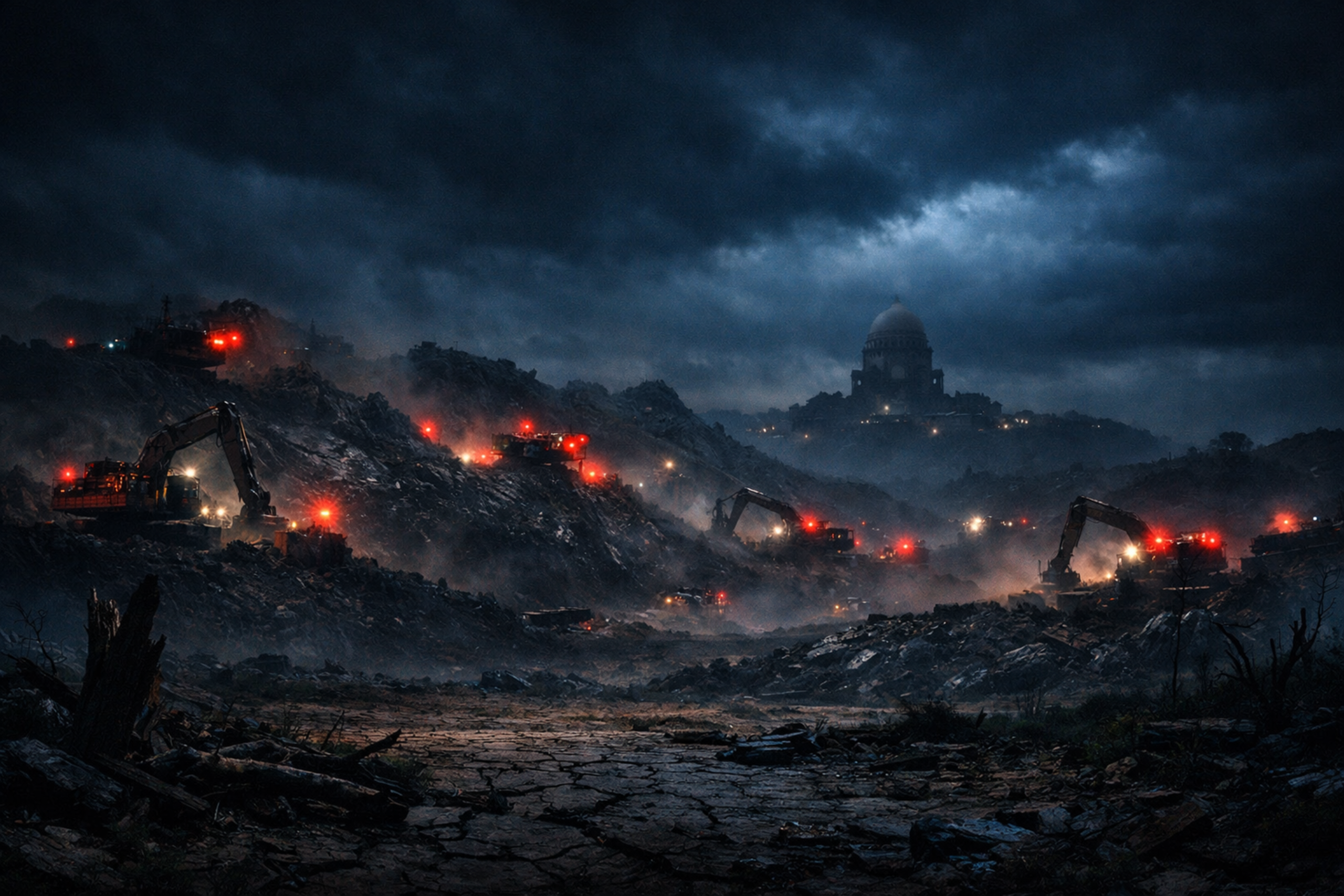
India’s environmental crisis is no longer a distant threat—it is unfolding in real time. From shrinking forests to polluted rivers and vanishing hills, the cost of unchecked development is becoming unbearable. One of the most alarming examples today is the systematic destruction of the Aravalli Hills, one of the oldest mountain ranges in the world. What has deeply disturbed environmentalists and citizens alike is the silence of the Supreme Court—especially when compared to its response to forest destruction in southern India involving powerful business interests.
This selective concern raises a crucial question: Why is there no strong judicial intervention when the Aravalli Hills are being cut down?
The call to Save Aravalli is growing louder, but is anyone in power listening?

Table of Contents
The Aravalli Hills: India’s Natural Shield
The Aravalli range stretches across Gujarat, Rajasthan, Haryana, and Delhi. These hills are not just rocks and stones; they are ecological lifelines.
Why Aravalli Is Crucial:
- Acts as a natural barrier against desertification
- Prevents the spread of the Thar Desert
- Recharges groundwater in NCR and Rajasthan
- Regulates temperature and rainfall
- Supports biodiversity, wildlife, and forests
Destroying Aravalli is not just an environmental crime—it is a direct threat to human survival in North India.
That is why the movement to Save Aravalli is not activism; it is necessity.
Supreme Court’s Unequal Environmental Stand?
In recent years, reports emerged of large-scale deforestation in southern India linked to a powerful businessman. Despite clear environmental violations, the Supreme Court took no strong or corrective action.
Now, the same pattern is visible in North India.
What’s Happening in Aravalli?
- Illegal mining continues openly
- Forest land is being diverted for real estate
- Hills are flattened for highways and townships
- Environmental clearance norms are diluted
- Local authorities remain inactive
Yet, no strict Supreme Court directive, no urgent hearings, no nationwide outrage.
This silence forces people to ask:
Is environmental justice dependent on who benefits from destruction?
Mining, Real Estate, and Political Nexus
The destruction of Aravalli is not accidental. It is driven by profit.
- Illegal stone mining generates massive revenue
- Luxury housing projects replace forest land
- Industrial corridors cut through eco-sensitive zones
- Political and corporate interests intersect
Despite earlier court orders declaring parts of Aravalli as protected forest, loopholes and redefinitions have allowed exploitation to continue.
If this continues, the slogan Save Aravalli will soon become a memorial phrase rather than a movement.
Climate Impact of Destroying Aravalli
The consequences are already visible:
- Delhi-NCR faces extreme heatwaves
- Groundwater levels are falling rapidly
- Air pollution worsens as green cover disappears
- Flooding during monsoon increases due to soil erosion
Environmental experts warn that without Aravalli, North India will face irreversible climate damage.
Ignoring this is not governance—it is negligence.
Citizens Are Speaking, Courts Are Not
Across India, citizens, environmental groups, and independent researchers have raised alarms. Social media campaigns like #SaveAravalli continue to trend, highlighting illegal mining videos and satellite images showing disappearing hills.
However:
- PILs move slowly
- Hearings get delayed
- Enforcement remains weak
The same Supreme Court that often speaks strongly on environmental protection seems remarkably restrained when it comes to Aravalli.
This contradiction damages public trust.

Environmental Law Should Be Equal for All
India has strong environmental laws:
- Forest Conservation Act
- Environment Protection Act
- Wildlife Protection Act
But laws mean nothing without equal enforcement.
Whether the destruction happens in the south or north, whether it benefits a small contractor or a billionaire, the response should be the same.
The demand to Save Aravalli is also a demand to save the Constitution’s promise of equality and justice.
What Needs to Be Done Immediately
To truly Save Aravalli, urgent steps are required:
- Declare the entire Aravalli range an Eco-Sensitive Zone
- Impose a complete ban on mining
- Conduct an independent environmental audit
- Hold officials accountable for violations
- Supreme Court must take suo motu action
- Restore degraded areas through afforestation
Without judicial courage, policy announcements are meaningless.
Silence Today, Disaster Tomorrow
History will judge institutions not by their words, but by their actions—or lack of them.
If the Supreme Court remains silent while Aravalli is destroyed, future generations will ask why India’s last line of defense against desertification was sacrificed for profit.
The time to act is now.
Save Aravalli is not a slogan. Save Aravalli is a warning.





I know but govt. kuch nhi kar rhi bekar govt. hai ye