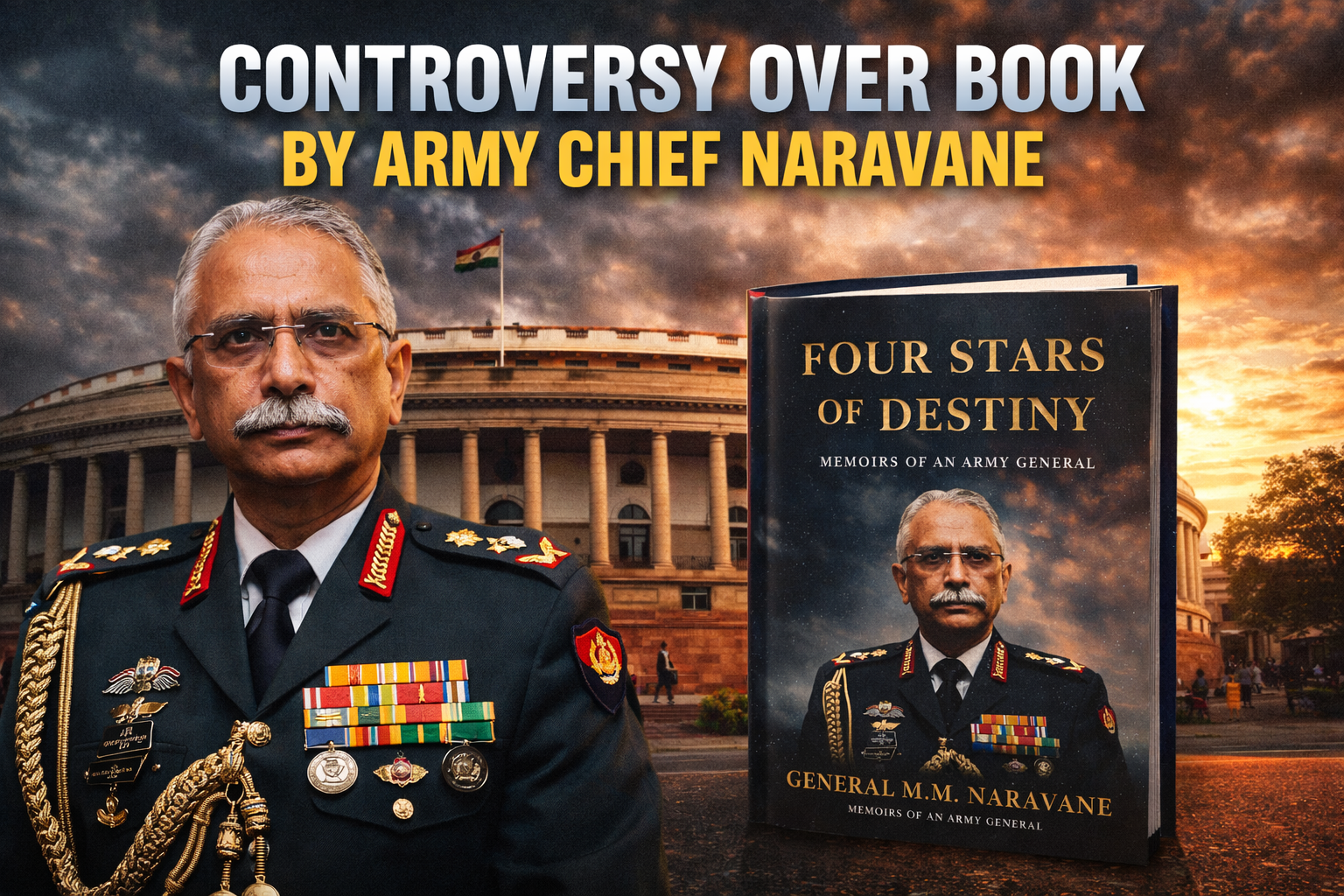
Former Indian Army Chief General Manoj Mukund Naravane recently found himself at the center of public and political discussion after references from his book were raised in Parliament (Sansad). The debate has triggered strong reactions across political circles, social media, and defense analysts, raising questions about civil–military relations and freedom of expression.
But what exactly is written in the book that caused such an uproar?
Who Is General M.M. Naravane?
General M.M. Naravane served as the 27th Chief of the Indian Army and is widely respected for leading the force during sensitive periods involving:
- Border tensions with China
- Ceasefire developments on the Line of Control
- Major strategic and diplomatic challenges
After retirement, like many senior military leaders, he chose to document his experiences and perspectives in a book.
Why Did the Book Become Controversial?
The controversy began when certain excerpts and references from General Naravane’s book were mentioned in Parliament, leading to sharp reactions. Critics claimed that some observations made in the book touch upon:
- Political decision-making
- Strategic military choices
- Civil-military coordination
While supporters argue that the book reflects personal experiences and professional insights, opponents believe that such disclosures should be handled cautiously due to national sensitivity.
Was Any Classified Information Revealed?
As of now, there is no official confirmation that the book contains classified or confidential information. Defense experts have pointed out that:
- Most military memoirs go through legal and security reviews
- Retired officials are allowed to share personal viewpoints
- Opinions do not necessarily represent official government positions
However, even interpretations and personal assessments can become controversial in a politically charged environment.
Why Was the Issue Raised in Parliament?
The matter gained political attention when leaders questioned:
- Whether such statements could impact India’s strategic image
- If former top officials should publicly critique policy decisions
- The long-term impact on trust between institutions
This transformed the issue from a literary discussion into a national political debate.
Supporters vs Critics: Two Sides of the Argument
Supporters Say:
- Writing memoirs is a democratic right
- Transparency strengthens institutions
- Honest reflection helps future generations learn
Critics Say:
- Sensitive issues should remain private
- Such books may be misused politically
- Military leadership must remain institutionally neutral
Bigger Question: Freedom of Expression vs National Sensitivity
The debate has reignited an important national discussion: Where should the line be drawn between freedom of expression and national security?
In democratic nations, retired military leaders often publish memoirs. However, India’s unique geopolitical challenges make such discussions more sensitive.

General M.M. Naravane’s book has become more than just a memoir—it has turned into a mirror reflecting India’s complex relationship between governance, military leadership, and public discourse. Whether one agrees or disagrees with the controversy, the incident highlights the importance of responsible expression, institutional respect, and informed debate.